
- Home
- Services
Services
Start Your Project
Contact BebrandgReady to Start?
Talk to BebrandgTalk to Bebrandg

- Projects
- Blog
- Contact
Build a clearer, stronger digital presence for your business.

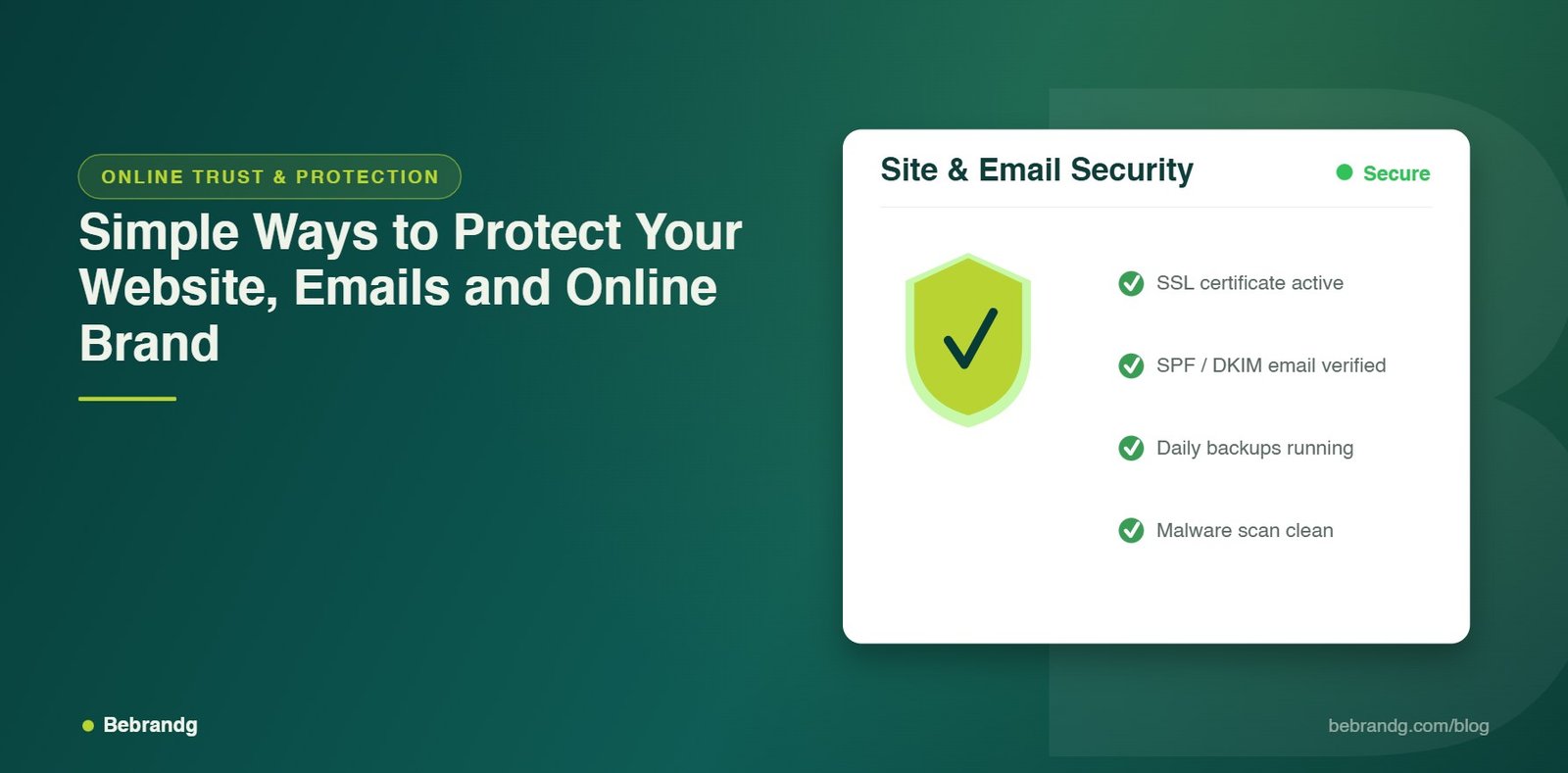
I've seen a business lose trust for reasons that had nothing to do with their actual work — an outdated website, a wrong phone number, an email that quietly started bouncing. Protection starts with simple, regular checks, not expensive tools.
Your phone number, WhatsApp link, email and location need to match exactly across your website, Google profile, social media and marketing materials. I check this first on every audit, because it's the easiest thing to get wrong without noticing.
A broken form or a wrong link can silently lose you enquiries for weeks before anyone notices. My habit is to test every important button, service link and contact form right after any update — not just at launch.
Use an official business email, avoid suspicious forwarding setups, and keep login access locked down. I've seen email problems quietly damage communication and customer trust long before anyone realised what was happening.
Old services, outdated project details and wrong prices confuse visitors faster than you'd think. A short, regular content review is usually all it takes to keep a website accurate.
Digital trust is built through small details that work correctly every day.
Before I let any client ask customers to submit their details, I make sure the website has working contact buttons, correct email links, updated service names and clear privacy wording. It's a short checklist, but I've seen how much it protects.
Trust is lost faster than it's built. A broken link, a wrong phone number or an email that bounces can quietly cost you enquiries you'll never know you missed. In my experience, small checks done regularly make a real difference to how customers experience your business. If you'd like a second pair of eyes on yours, I'm glad to take a look.
Comments
Be the first to comment.
Leave Your Comment